Online
Reservation
Integer congue malesuada eros congue varius. Sed malesuada dolor eget velit pretium. Etiam porttitor finibus. Nam suscipit vel ligula at dharetra
Integer congue malesuada eros congue varius. Sed malesuada dolor eget velit pretium. Etiam porttitor finibus. Nam suscipit vel ligula at dharetra

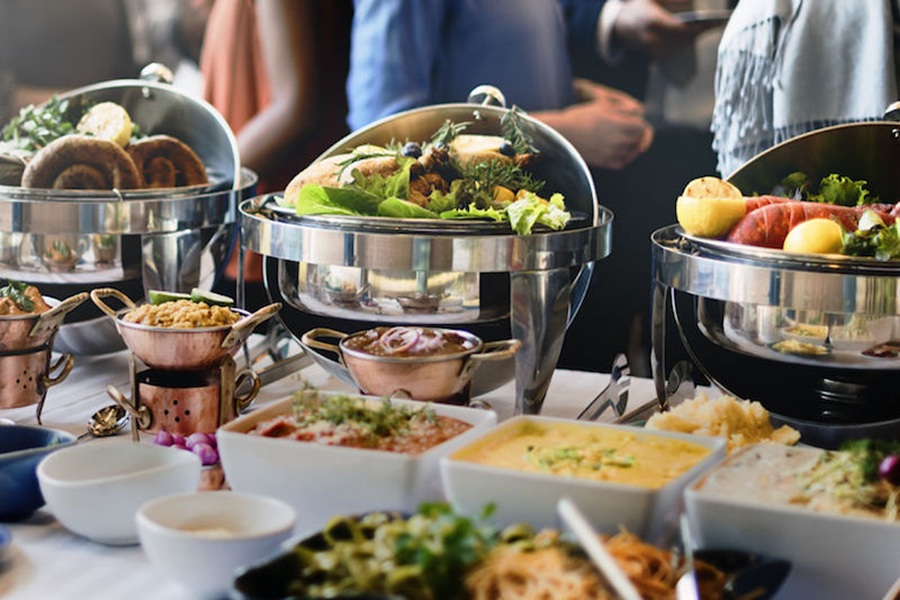
In the catering industry, the term “pax” is a shorthand reference commonly used to indicate the number of people or guests being served at an event. Derived from the Latin word pax, meaning “peace,” it has evolved as a practical term within hospitality to quantify attendees in a concise and professional manner. Whether you’re planning an intimate gathering or a large corporate function, understanding this term is essential for clear communication between clients and caterers.
The simplicity of the term “pax” makes it incredibly useful in catering operations. Instead of using longer phrasing like “number of guests” repeatedly, caterers and event planners can efficiently use “pax” to communicate specifics about group sizes. It becomes particularly crucial when organizing large-scale events where precision is key—every guest must be accounted for to ensure food availability, seating arrangements, and service staff are adequate.
Here’s how it might appear in everyday usage:
– Caterer communication: A catering team might ask, “How many pax are we serving for this event?”
– Contracts and invoices: Many catering contracts will state pricing based on pax. For example: “$35 per pax.”
– Event planning logistics: Rentals (e.g., tables and chairs) often depend on pax to ensure sufficient quantities are ordered.
Using a single word like “pax” reduces ambiguity during discussions about guest counts. It ensures that everyone involved—from chefs to event coordinators—operates under consistent terminology. This shared understanding minimizes errors while improving efficiency throughout planning stages.
| Advantages of Using Pax | Explanation |
| Clarity | Reduces potential misunderstandings when discussing guest numbers. |
| Efficiency | Streamlines conversations by replacing lengthier phrases like “number of people.” |
| Universality | Widely understood across different sectors within hospitality industries worldwide. |
Understanding what “pax” means—and how it applies—lays an essential foundation for anyone involved in planning catered events. By mastering this simple yet powerful piece of industry jargon, you’ll enhance communication with professionals while ensuring every detail aligns with your vision.
In the catering industry, the term “pax” is fundamental when it comes to planning and estimating the quantity of food required for an event. Derived from the Latin word for “peace” or “persons,” pax simply refers to the number of guests anticipated or confirmed. Understanding how caterers use pax ensures that events are not only smooth and well-organized but also that food waste is minimized while guest satisfaction remains high.
| Event Type | Food Estimation Considerations |
| Corporate luncheons | Lighter portions are typical; sandwiches, salads, and beverages often dominate menus. |
| Weddings | Larger portions with multiple courses; late-night snacks might be added based on guest count. |
| Casual gatherings | More flexible with self-service options but still proportional to pax count. |
By combining these strategies with precise calculations tied directly to pax, catering teams can efficiently meet client expectations while managing costs effectively.
In the catering industry, the term “pax” is used as shorthand for “per person” or “guest.” Understanding how caterers use pax is essential for planning events efficiently and ensuring there’s enough food for all attendees without over-preparing. Here’s a closer look at how caterers incorporate pax to estimate food quantities.
Caterers rely on pax counts as the foundation for determining how much food and drink to prepare. Since each guest (or pax) typically consumes a specific portion size based on the type of event and menu, accurate estimates allow caterers to plan effectively.
Key considerations include: – Menu Type: A plated dinner will require precise portions per pax, while buffets may involve adjustments to account for varied appetites. – Event Duration: Longer events generally lead to higher consumption per pax, especially with beverages or snacks. – Guest Demographics: Adult guests may consume more than children, and dietary restrictions can also influence quantities.
| Menu Item | Serving Size Per Pax | Example Calculation |
| Main Course | 1 serving | 100 guests = 100 servings |
| Appetizers | 3–5 pieces | 100 guests = 300–500 pieces |
| Salads | 1 cup | 100 guests = ~8 gallons |
| Desserts | 1 serving | 100 guests = 100 servings |
| Beverages | ~2 drinks/hour | 100 guests at a 3-hour event = ~600 drinks |
These calculations are flexible based on the type of event. For example, cocktail parties often emphasize appetizers and drinks rather than full meals.
Certain events require tailoring food quantities beyond standard calculations. For instance: – A wedding dinner may include additional courses or late-night snacks. – Corporate lunches might prioritize lighter meals such as salads and sandwiches. – Cultural events often feature specific cuisines that dictate unique portioning.
One challenge in using pax counts is balancing between having enough food and avoiding waste. To achieve this balance: – Use historical data from similar past events. – Discuss consumption patterns with clients during planning. – Incorporate “buffer servings” (extra portions) only when necessary—for example, add an extra ~5% in case of unexpected guests.
By leveraging pax accurately, caterers can ensure a smooth dining experience while minimizing excess costs or waste through careful preparation tailored specifically to guest numbers.
In the catering industry, “pax” is widely used as a shorthand term to refer to the number of guests or participants an event will serve. Understanding how pax is incorporated into catering packages and menus can help planners, hosts, and caterers effectively align expectations with service delivery. This section explores examples of how pax is used in real-world scenarios to provide clarity on its practical applications.
| Package Type | Number of Pax Included | Example Details |
| Small Package | Up to 25 pax | Includes 3 appetizers, 2 mains, 1 dessert |
| Medium Package | 25-50 pax | Includes 5 appetizers, 3 mains, 2 desserts |
| Large Package | Over 50 pax | Includes buffet-style service with customizable options |
By organizing offerings based on pax levels, caterers simplify the planning process for clients while ensuring food quantities and menu diversity are appropriate.
In addition to fixed packages, many caterers allow for customizable menus that scale according to pax. For example: – A wedding menu might allow hosts to select starters, mains, and desserts for a group of up to 100 pax. – Corporate events may offer tiered beverage services per pax, such as coffee stations or open bars charged at a rate per person. – Specialty cuisine options (e.g., vegan or gluten-free) can also be added based on specific dietary needs within a group size.
The flexibility in these options ensures that budgets are adhered to while accommodating guest preferences.
The use of “pax” also determines whether a buffet or plated service is more feasible: – Buffet Service: Designed for larger groups (e.g., over 30 pax), allowing guests to serve themselves from an assortment of dishes. Buffets reduce service costs but require precise estimation of food quantities.
Beverage packages often use pax as the metric for pricing: – Unlimited soft drinks for $5/pax. – Open bar priced at $15/pax/hour. – Coffee and tea stations available at $3/pax.
These price structures allow clients to manage costs while ensuring every guest has access to refreshments suitable for the event’s duration.
To illustrate further: 1. A birthday party hosting 40 pax might opt for a medium-sized package with finger foods, dessert platters, and soft beverages included. 2. A corporate seminar with 150 pax may require buffet-style catering alongside coffee stations calculated at a cost per person. 3. An intimate gathering with just 10 pax might focus on plated meals paired with wine served directly at each table.
Understanding how “pax” integrates into menu planning ensures seamless coordination between client needs and catering execution while maintaining proper budgeting controls tailored specifically to group sizes.
The term “pax” plays a pivotal role in determining portion sizes and pricing within the catering industry. Understanding how pax directly impacts these areas is essential for both caterers and clients, as it ensures that the event is successfully planned without food shortages or unnecessary waste. Below, we explore how pax influences portion planning, pricing strategies, and overall event satisfaction.
| Factor | Impact on Portions | Impact on Pricing |
| Event Type | Formal dinners may require larger plates. | Formal events typically have higher costs. |
| Time of Day | Breakfast = lighter portions; Dinner = more food. | Breakfast/lunch catering tends to be cheaper than dinner services. |
| Cuisine Style | Family-style meals need shared platters. | Premium cuisines (e.g., seafood) increase costs significantly. |
To create balance between portioning and pricing: – Always confirm RSVP counts early—finalize adjustments closer to the date. – Account for dietary restrictions ahead of time when calculating individual servings. – Work collaboratively with your caterer—they can recommend portion standards tailored specifically to your event needs and budget constraints.
Understanding how “pax” impacts portion sizes and pricing allows both caterers and hosts to optimize planning while ensuring guest satisfaction within allocated budgets.
Understanding the term pax is critical in catering, but mistakes can occur when calculating it for events. Misjudging pax can lead to underestimating or overestimating food quantities, affecting guest satisfaction and event costs. Here are some common mistakes and how to avoid them:
Overlooking dietary restrictions or preferences is a common error when calculating pax. Simply counting the total number of attendees isn’t enough if a significant portion requires vegetarian, vegan, gluten-free, or other special menu options.
How to Avoid:
– Conduct a survey of your guests beforehand to identify dietary requirements. – Always include a percentage of alternative meal options (e.g., 10-15% vegetarian dishes) in case of unexpected needs.
If children are part of the guest list, treating their dietary needs as equivalent to adults’ can inflate food costs unnecessarily. Children typically consume smaller portions than adults.
How to Avoid:
– Estimate children’s portions at half or two-thirds of an adult serving. – If applicable, consider creating a kid-friendly menu with simpler dishes.
The time of day and type of event greatly influence how much your guests will eat. For example: – At mid-afternoon gatherings, people tend to eat less than they would at dinner events. – Formal events may call for multiple courses compared to casual receptions with finger foods.
How to Avoid:
– Adjust menu quantities based on whether the event is breakfast, lunch, dinner, or cocktails. – Consult with your caterer about typical consumption patterns for specific event types.
Relying too heavily on RSVPs without accounting for no-shows or last-minute additions can throw off calculations.
How to Avoid:
– Anticipate that around 5-10% of guests might not attend despite RSVP confirmations. – For large gatherings, consider adding a buffer for unexpected attendees (e.g., an extra 5% food quantity).
| Guest Type | Estimated Attendance Rate | Adjustments |
| RSVP Confirmations | ~90% | Prepare slightly less |
| No RSVP Provided | ~50% | Add buffer portions |
| VIPs or Key Guests | ~100% | Ensure full servings |
Different serving styles—buffet vs plated meals—affect how pax translates into actual food amounts: – Buffets often require more variety and slightly larger quantities since guests serve themselves. – Plated meals allow for precise portioning but may limit flexibility as extra servings might not be readily available.
How to Avoid:
When opting for buffets: – Plan for about 10% more food than the total pax count as guests tend to take larger portions. For plated meals: – Stick precisely to your confirmed headcount but have a contingency plan in case additional servings are needed due to unforeseen circumstances.
While focusing on food quantities, beverages are sometimes underestimated in relation to pax numbers. Events like cocktail receptions may demand higher beverage volumes per person compared to formal dinners.
How to Avoid:
Estimate drink needs based on event duration and guest demographics: – Casual/formal dinners: ~1 drink per hour per person. – Cocktail parties: ~2 drinks per hour per person during peak times. – Include non-alcoholic options proportional to anticipated preferences (e.g., water, juices).
By avoiding these common pitfalls when determining pax, you can ensure smoother catering logistics and improved guest satisfaction while minimizing waste or shortages.
Accurately determining the number of pax (persons or guests) for your event is a crucial step in successful catering. Whether you’re planning a corporate luncheon, wedding, or casual get-together, understanding how to calculate pax ensures that food quantities are sufficient, costs are managed effectively, and guests leave satisfied. Below are practical tips and strategies to help you determine pax accurately.
Different types of events attract diverse groups of people with varying appetites. To ensure accurate estimates:
– Consider Dietary Restrictions: Ask about specific dietary needs like vegetarian, vegan, gluten-free, or allergy requirements when collecting RSVPs.
– Identify Heavy Eaters vs. Light Eaters: Events like corporate lunches may see smaller portion sizes consumed than festive celebrations where individuals tend to indulge more.
Even with careful headcounts, unexpected changes can happen:
– Add an extra 5–10% buffer to the calculated pax number to account for last-minute attendees or unexpected appetites. This ensures you don’t run out of food during the event.
Professional caterers often have experience handling events across varying scales and can provide insight into planning for pax effectively:
– Share your guest count early so they can plan portions correctly.
– Discuss menu flexibility; some caterers may adjust quantities on short notice if attendance changes close to the event date.
Event management tools and apps can help streamline tracking RSVPs and estimating numbers: | Tool/Software | Purpose | |——————|—————————| | Eventbrite | Tracks RSVPs automatically| | Google Forms | Collects dietary preferences| | Allseated | Manages seating charts & guest lists|
These digital solutions ensure you stay organized while minimizing errors associated with manual tracking.
To avoid underestimating or overestimating your pax: 1. Never assume everyone will attend without confirmations. 2. Don’t rely solely on informal verbal commitments—secure written RSVPs. 3. Avoid last-minute changes that disrupt food preparation and service.
By implementing these strategies and collaborating openly with your caterer, you’ll ensure that your event runs smoothly with enough food for all attendees while minimizing waste or shortages.