Online
Reservation
Integer congue malesuada eros congue varius. Sed malesuada dolor eget velit pretium. Etiam porttitor finibus. Nam suscipit vel ligula at dharetra
Integer congue malesuada eros congue varius. Sed malesuada dolor eget velit pretium. Etiam porttitor finibus. Nam suscipit vel ligula at dharetra

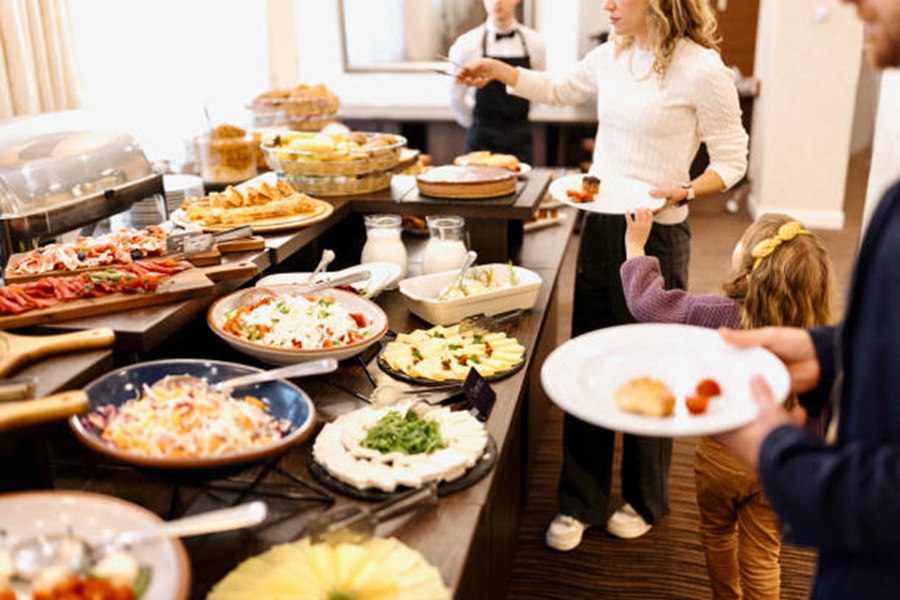
Family style catering is a dining concept that encourages communal eating and sharing. Unlike plated meals or buffet-style service, food is served in large dishes or platters and placed at the center of the table. Guests help themselves, creating an interactive and engaging dining experience. This approach is commonly seen at family gatherings or casual celebrations but has grown in popularity for formal events due to its unique charm and inclusivity.
Family style catering works well for events where fostering community and interaction is a priority. Examples include: – Weddings with a warm, intimate atmosphere – Corporate retreats focused on team-building – Holiday celebrations that emphasize togetherness – Milestone birthdays or anniversaries
This serving style can create a relaxed yet elegant feel, bridging the gap between formal plated dinners and casual buffets.
Family style catering stands out because of its communal nature. Unlike plated service where each guest receives individually prepared portions, family style allows for flexible servings. In comparison to buffet-style options: – There’s less waiting in lines. – Food is served directly at the table.
| Feature | Family Style | Buffet | Plated Service |
| Interaction Level | High – Shared Platters | Low – Self-Service | Minimal – Individual |
| Custom Portioning | Flexible | Flexible | Fixed |
| Atmosphere | Casual & Elegant | Casual | Formal |
The appeal of family style catering lies in its ability to blend functionality with emotion. This method mirrors how many people eat at home—passing dishes among loved ones—evoking nostalgia while delivering high-quality cuisine. Additionally, it aligns with sustainability goals by reducing food waste; guests take only what they need instead of accepting pre-portioned servings they may not finish.
Family style catering brings people together in a way that other formats may not achieve as naturally. By prioritizing interaction over formality without sacrificing quality or aesthetic appeal, this catering method has become increasingly popular for hosting memorable events.
Family-style catering offers a unique approach to dining that enhances the overall experience of any event. By serving food in large, shareable portions placed at the center of the table, guests can enjoy an interactive and communal meal. Below, we explore the key benefits of choosing family-style catering for your event.
One of the standout advantages is how it fosters interaction among guests. Sharing platters naturally encourages conversation as attendees pass dishes to one another and discuss their choices. It’s an ideal setup for events where building connections—whether personal or professional—is a priority.
Family-style catering eliminates much of the rigidity associated with formal plated dinners while still maintaining elegance and sophistication. Guests can help themselves to portions that suit their preferences without feeling rushed.
With multiple dishes served on each table, guests have access to a wide range of options without needing to move around or wait in line.
| Catering Style | Variety Available | Guest Interaction | Flexibility |
| Family Style | High | High | Flexible |
| Buffet | Medium | Low | Medium |
| Plated | Low | Low | Rigid |
Although it appears lavish, family-style catering is often a cost-effective option compared to plated dinners. Meals are prepared in bulk quantities with less emphasis on individual plating styles, reducing costs related to presentation but maintaining quality.
By emphasizing warm hospitality combined with practical efficiency and adaptability across various event types, family-style dining stands out as an excellent choice for creating memorable culinary experiences that bring people closer together while enjoying exceptional food options tailored thoughtfully to their needs.
Planning a family-style catering event involves multiple factors that can contribute to its success. Whether you’re hosting a wedding, corporate event, or a casual family gathering, understanding these key considerations will help ensure your event runs smoothly. Below are the most important aspects to keep in mind.
Family-style catering requires careful attention to seating arrangements and table space:
– Table Layouts: Ensure tables are large enough to accommodate serving dishes along with place settings for guests. Rectangular tables often work better than round ones for family-style service as they allow easier reach for shared dishes.
– Serving Logistics: Confirm with the venue if they provide staff for passing dishes or clearing plates when necessary, as this can impact the overall flow of service. – Accessibility: Make sure there’s ample room between tables so guests and servers can move comfortably without disrupting others.
The menu is at the heart of any catering style but plays an especially important role in family-style setups due to the communal nature of dining. Some points to consider include:
– Shareable Dishes: Select items that are easy to serve from shared plates or bowls (e.g., roasted vegetables, pastas, casseroles). Avoid foods that require intricate individual assembly. – Quantity Planning: Work closely with your caterer to calculate portion sizes accurately so there’s enough food without excessive waste. – Example Table: | Dish Type | Recommended Portion per Person | Notes | |——————|———————————|——————————–| | Salad/Appetizer | 1.5 cups | Factor in seconds | | Main Entrée | 6–8 oz | Protein-heavy items | | Side Dish | 1 cup | Starchy or vegetable-based | | Dessert | 2 servings | Mini portions ideal |
While family-style catering creates an inviting atmosphere, it requires detailed budgeting due to potential increased costs associated with serving ware and staffing:
– More serving dishes may be needed compared to buffet or plated meals. – Additional waitstaff could be required depending on guest count and venue policies.
Efficiency in timing is critical during a family-style service as it impacts how fresh and warm food remains by the time it reaches guests: – Collaborate with your caterer on an ideal pacing schedule. – Assign specific servers (if available) who can coordinate replenishing empty platters seamlessly.
By balancing these considerations thoughtfully, you’ll create not just a meal but an experience that fosters connection among attendees while keeping logistics manageable for all involved parties.
Family style catering stands apart from other catering approaches by emphasizing communal dining, shared dishes, and a sense of togetherness. To better understand how it compares, let’s explore its differences with other popular catering styles such as plated meals, buffets, and stations.
| Aspect | Family Style | Plated Meals |
| Atmosphere | Informal and interactive | Formal |
| Portion Control | Guest-controlled | Pre-determined |
| Variety of Choices | Multiple dishes per table | Limited to selected entrée |
| Aspect | Family Style | Buffet |
| Movement | Guests stay seated | Guests move around |
| Interaction | Encourages social interaction at the table | Limited interaction |
| Ease of Access | Food is within arm’s reach | Requires queuing |
| Aspect | Family Style | Stations |
| Customization | Limited | High |
| Entertainment Value | Minimal | High |
| Space Requirements | Moderate | Extensive |
Understanding these distinctions helps event planners choose the best option based on guest preferences, event formality, venue constraints, budget considerations, and desired dining experience. Whether prioritizing intimacy or efficiency, each catering style offers unique advantages that cater to specific needs.
By weighing these differences carefully in alignment with your event’s goals, you can determine whether family-style dining provides the ideal combination of warmth and practicality that resonates with your vision.
Family style catering offers a unique way to serve meals at events, creating a relaxed and communal atmosphere. This approach involves serving large platters or bowls of food that are passed around the table by guests, allowing everyone to share dishes and engage in conversation. Below are some key advantages of opting for family style catering when planning your next gathering.
| Aspect | Family Style Catering | Plated Meals | Buffet |
| Interaction Level | High – promotes sharing & conversation | Low | Limited during selection |
| Customization | Guests self-portioned | Pre-determined portions | Flexible but less personal |
| Time Efficiency | Balanced serving time for all tables | Depends per guest/course timing | Highly variable |
While family style dining is often associated with smaller gatherings like intimate weddings or dinner parties, it also works well for larger groups where fostering connection is prioritized: – Corporate team-building lunches designed to encourage collaboration. – Extended family reunions where shared experiences over food strengthen bonds. – Celebrations such as anniversaries or milestone birthdays that thrive on personal interaction.
Though it might seem labor-intensive at first glance due to the need for multiple shared dishes per table: 1) Family-style setups typically reduce overall staff costs since fewer servers are needed compared with plated service. 2) Leftovers are minimized because individuals serve themselves instead of overwhelming fixed plate defaults.
Choosing family-style dining transforms event catering beyond meal delivery logistics toward meaningful interactions reflective values bridging intimate yet relaxed settings seamlessly connecting people’s meals crafted memories lasting the way mealtime sharing adds relational depth.
Family-style catering has become a popular choice for hosting gatherings, as its unique approach fosters connection and creates a welcoming environment. Whether you’re planning a wedding reception, corporate event, or holiday dinner, this catering style offers distinct advantages that elevate the guest experience.
One of the greatest benefits of family-style dining is how it promotes interaction among guests. Unlike plated meals or buffet setups:
– Guests share food at the table, passing dishes around, which naturally sparks conversation.
– A communal dining experience creates opportunities for people to engage with one another more deeply, breaking down formal barriers often present in other catering styles.
For events like weddings or reunions, this setup helps guests feel more connected to each other and enhances the sense of togetherness.
Family-style service allows guests to serve themselves from shared plates, offering greater flexibility than individual plated meals:
– Guests have control over their portion sizes, reducing food waste while accommodating different appetites.
– This flexibility also makes it easier for attendees with dietary preferences or restrictions to choose what works best for them.
| Guest Preference | Family-Style Catering Benefit |
| Light eater | Can take smaller portions as needed |
| Dietary restriction | Avoids items incompatible with their diet |
| Hungry diner | Can enjoy seconds without hesitation |
This inclusive approach ensures everyone leaves satisfied.
Family-style presentations often feature large platters or bowls of beautifully arranged dishes placed directly on tables. This creates an eye-catching display that doubles as part of the décor:
– Large serving dishes add elegance and warmth to tablescapes.
– A variety of foods showcased together enhances the visual appeal and adds excitement to mealtime.
Unlike buffets that require attendees to leave their seats repeatedly or wait in line:
– Family style keeps everyone seated comfortably while servers bring dishes directly to each table.
– It feels more personal and relaxed, particularly at intimate gatherings where comfort is key.
While costs depend on menu choices and guest count, family-style catering can be more cost-effective compared to plated service due to fewer staff requirements:
– Servers focus on delivering platters rather than individually plating meals for every guest.
– Fewer individual servings also streamline ingredient usage without compromising guest satisfaction.
This catering style works well in various settings but shines especially in events designed around community and shared experiences:
1. Weddings: Encourages mingling across tables during receptions. 2. Corporate Retreats: Promotes team bonding through shared mealtime. 3. Family Reunions: Celebrates togetherness with a homestyle atmosphere. 4. Holiday Parties: Creates a festive mood with comforting food served communally.
By choosing family-style catering, hosts can create memorable moments where food brings people closer together—turning any gathering into an unforgettable celebration of connection and community.
Planning a family-style catering event requires thoughtful coordination and attention to detail to ensure that the dining experience is enjoyable, seamless, and memorable for all guests. This section provides a step-by-step guide with practical tips for effectively organizing a successful family-style gathering.
| Topic | Questions to Ask |
| Menu Options | Does the caterer offer customizable family-style menus? Are seasonal ingredients used? |
| Portion Sizes | How will portions be calculated per table? |
| Serving Equipment | Will they provide platters, utensils, and tableware? |
| Staffing | How many staff members will assist with serving? |
By practicing timing before your event day arrives, you’ll reduce stress while offering guests an uninterrupted dining experience.
For larger gatherings where communication across larger tables may be difficult due distance — consider strategically placing duplicate serving platers every few places instead single central pile.